

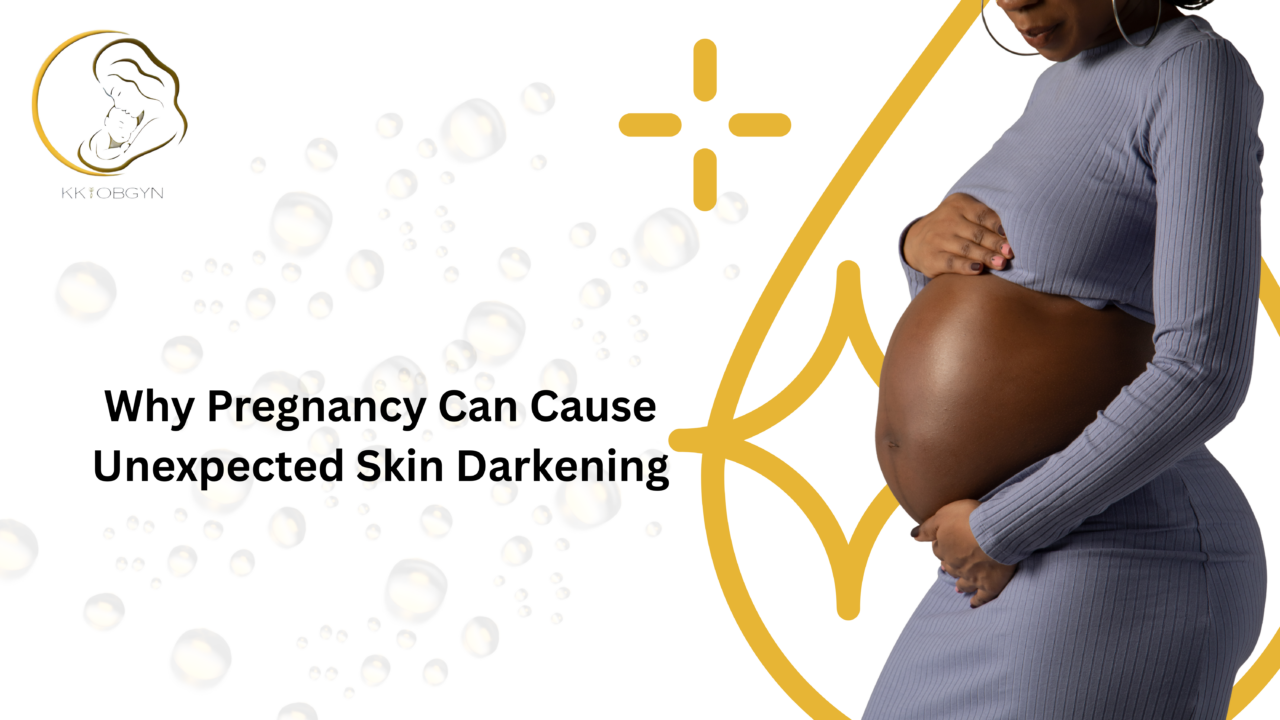
During pregnancy, the body undergoes dramatic hormonal, vascular, and metabolic changes that affect nearly every system, including the skin. One of the most common yet often surprising changes is skin darkening, also known as hyperpigmentation.
Many women notice patches of darker skin on their face, neck, underarms, inner thighs, or abdomen. Some may also observe that freckles become darker, moles appear more prominent, or that a distinct dark line develops down the middle of the stomach, known as the linea nigra.
Although these changes can feel alarming or cosmetically distressing, they are usually normal and temporary. Pregnancy-related skin darkening is primarily driven by hormones that increase melanin production, the pigment responsible for skin colour.
Understanding why this happens helps reduce anxiety and reassures women that these changes are part of a natural and healthy pregnancy process.
What Is Pregnancy-Related Hyperpigmentation?
Hyperpigmentation refers to areas of skin that become darker than the surrounding skin due to increased melanin production.
During pregnancy, this can appear as:
- Uneven facial darkening
- Dark patches on the cheeks or forehead
- Darkened nipples and areolas
- Linea nigra on the abdomen
- Darkened underarms or inner thighs
- Increased visibility of freckles or moles
Common Areas Affected
✔ Face (cheeks, forehead, upper lip)
✔ Abdomen (linea nigra)
✔ Breasts (areolas)
✔ Underarms
✔ Neck
✔ Inner thighs
The Hormonal Cause of Skin Darkening
The main driver of pregnancy-related skin darkening is hormonal change.
During pregnancy, levels of:
- Oestrogen
- Progesterone
- Melanocyte-stimulating hormone (MSH)
increase significantly.
These hormones stimulate melanocytes, the cells responsible for producing melanin.
Hormonal Effects on Skin Pigmentation
| Hormone | Effect on Skin |
|---|---|
| Oestrogen | Increases melanin activity |
| Progesterone | Enhances skin sensitivity |
| MSH | Directly stimulates pigmentation |
| hCG | Indirect hormonal influence |
Because melanocytes become more active, even normal sun exposure or friction can lead to darker pigmentation.
Why Some Women Are More Affected Than Others
Not all pregnant women experience the same degree of skin darkening.
Factors that influence severity include:
- Skin tone
- Genetics
- Sun exposure
- Hormonal sensitivity
- Previous pregnancies
Women with darker skin tones or a family history of pigmentation changes are often more likely to experience noticeable hyperpigmentation.
Risk Factors for Hyperpigmentation
| Factor | Impact |
|---|---|
| Genetics | Higher likelihood |
| Sun exposure | Worsens pigmentation |
| Hormonal sensitivity | Stronger skin response |
| Previous pregnancy | Increased recurrence |
The Linea Nigra: The Dark Line on the Abdomen
One of the most recognisable pregnancy skin changes is the linea nigra.
This is a vertical dark line that runs from the pubic area to the navel and sometimes higher.
Why Linea Nigra Forms
- Increased melanin production along the abdominal midline
- Hormonal stimulation of skin cells
- Stretching of the abdominal skin
Linea Nigra Characteristics
✔ Appears mid-pregnancy
✔ Darkens as pregnancy progresses
✔ More visible in darker skin tones
✔ Usually fades after delivery
It is completely normal and not harmful.
Melasma (The “Mask of Pregnancy”)
Melasma is a type of facial hyperpigmentation that appears as symmetrical dark patches, usually on the:
- Cheeks
- Forehead
- Upper lip
- Nose
It is sometimes called the “mask of pregnancy.”
Melasma Triggers
- Hormonal changes
- Sun exposure
- Genetic predisposition
- Heat exposure
Melasma Appearance
| Feature | Description |
|---|---|
| Pattern | Symmetrical patches |
| Colour | Light brown to dark brown |
| Location | Face |
| Duration | May persist postpartum |
Sunlight and Skin Darkening
Sun exposure significantly increases pigmentation during pregnancy.
Ultraviolet (UV) rays stimulate melanocytes, and during pregnancy, these cells are already more active.
Even short periods in the sun may worsen:
- Facial pigmentation
- Linea nigra visibility
- Freckles
- Patchy darkening
Sun-Related Pigmentation Areas
✔ Face
✔ Arms
✔ Neck
✔ Abdomen
Pregnant skin becomes more sensitive to UV exposure.
Friction and Skin Darkening
Another overlooked cause of pigmentation is friction.
Areas that experience frequent rubbing may darken more easily during pregnancy.
Common friction areas include:
- Underarms
- Inner thighs
- Under the breasts
- Waistline
Friction-Related Hyperpigmentation
| Area | Cause |
|---|---|
| Underarms | Deodorant + friction |
| Inner thighs | Walking friction |
| Under breasts | Skin rubbing |
| Waistline | Clothing pressure |
Hormonal sensitivity makes these areas more reactive than usual.
Darkening of Nipples and Areolas
Many women notice that their nipples and areolas become darker and larger during pregnancy.
This is a completely normal adaptation.
Why This Happens
- Hormonal stimulation of melanin
- Preparation for breastfeeding
- Increased blood flow to breast tissue
Areola Changes
✔ Darker colour
✔ Increased size
✔ More visible glands (Montgomery tubercles)
✔ Increased sensitivity
These changes help newborns locate the breast more easily after birth.
Is Skin Darkening Permanent?
In most cases, pregnancy-related pigmentation is temporary.
After delivery, as hormone levels stabilise:
- Melanin production decreases
- Dark patches gradually fade
- Skin tone begins to even out
However, some women may notice that certain areas, especially melasma, take longer to fade or may remain partially visible.
Postpartum Timeline
| Time After Birth | Skin Changes |
|---|---|
| 0–6 weeks | Pigmentation remains visible |
| 6–12 weeks | Gradual fading begins |
| 3–12 months | Significant improvement |
Normal Skin Darkening vs Concerning Changes
Normal Pregnancy Pigmentation
✔ Gradual darkening
✔ Symmetrical patches
✔ No itching or pain
✔ Appears during pregnancy
✔ Fades postpartum
When to Seek Medical Advice
□ Sudden skin changes unrelated to pregnancy pattern
□ Itching, bleeding, or pain
□ Rapidly changing moles
□ Irregular or unusual lesions
Any suspicious skin changes should be evaluated by a healthcare provider.
Can Skin Darkening Be Prevented?
While it may not be completely preventable, its severity can often be reduced.
Helpful Prevention Strategies
✔ Use sunscreen daily
✔ Avoid prolonged sun exposure
✔ Wear protective clothing
✔ Avoid excessive heat exposure
✔ Maintain gentle skincare routines
Safe Skincare During Pregnancy
Pregnant skin is more sensitive, so care must be taken with products.
Safe Practices
- Use gentle cleansers
- Avoid harsh bleaching agents
- Choose pregnancy-safe sunscreen
- Moisturise regularly
Certain skin-lightening products may not be safe during pregnancy and should be avoided unless prescribed.
Emotional Impact of Skin Changes
Skin changes can affect self-esteem and body image.
Women may feel:
- Less confident
- Surprised by appearance changes
- Anxious about permanence
It is important to remember that these changes reflect healthy hormonal adaptation, not damage or disease.
Support and reassurance play an important role in emotional wellbeing during pregnancy.
Conclusion
Pregnancy-related skin darkening is a natural and common result of hormonal changes that increase melanin production in the body. Areas such as the face, abdomen, breasts, and underarms may become darker due to increased activity of melanocytes, sun exposure, friction, and genetic factors.
Although these changes can be unexpected, they are generally harmless and temporary. Most pigmentation gradually fades after childbirth as hormone levels return to normal. In some cases, mild changes may persist, especially in melasma, but they can often be managed with sun protection and skincare.
Understanding these changes helps reduce anxiety and allows women to appreciate the remarkable ways the body adapts during pregnancy. Skin darkening is not a sign of illness, it is simply part of the body’s natural response to the incredible journey of creating life.