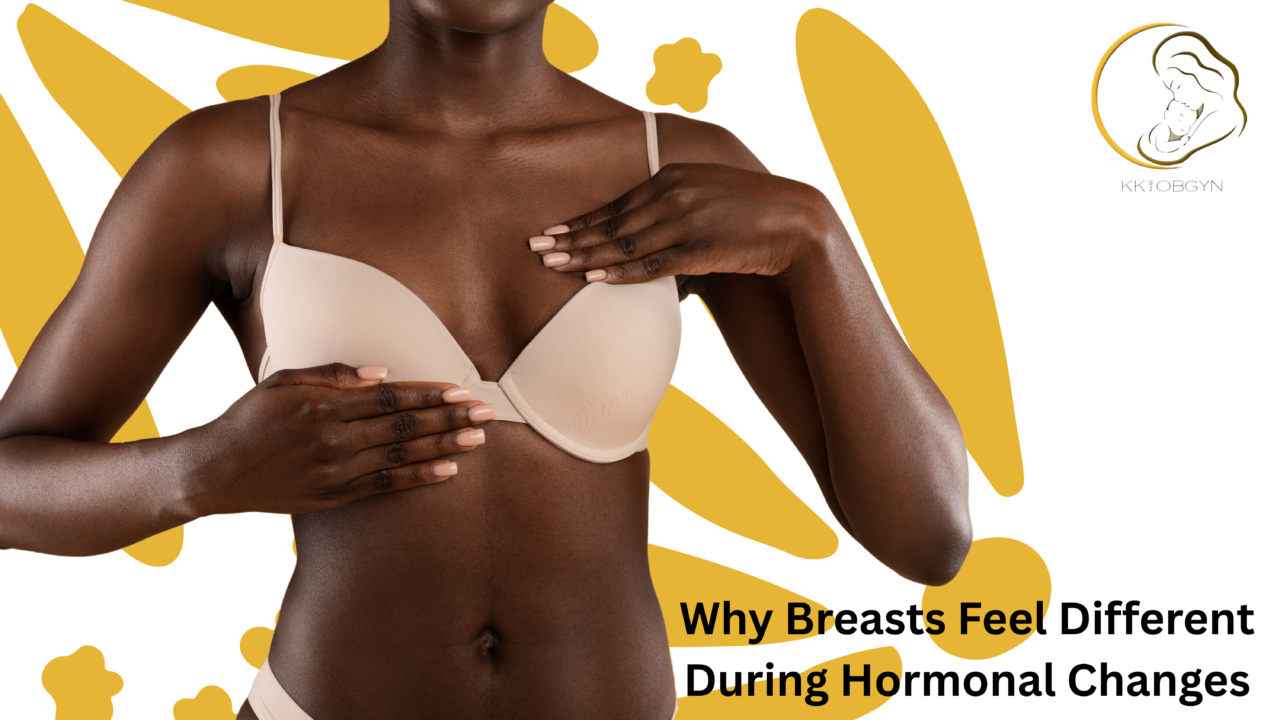
Many women notice that their breasts do not feel the same throughout their lives or even throughout a single month. At certain times, breasts may feel fuller, heavier, tender, swollen, lumpy, sensitive, or even painful. At other times, they may feel softer and less noticeable.
These changes are often linked to hormonal fluctuations. The breasts are highly sensitive to hormones, particularly oestrogen, progesterone, and prolactin. Because hormone levels naturally change during the menstrual cycle, pregnancy, breastfeeding, perimenopause, and menopause, breast tissue frequently changes in response.
While many of these changes are completely normal, they can sometimes cause concern, especially when they are unexpected. Understanding the relationship between hormones and breast tissue helps women distinguish normal changes from symptoms that may require medical evaluation.
Why Breasts Respond to Hormones
Breasts are made up of:
- Glandular tissue
- Milk-producing structures
- Fat tissue
- Connective tissue
- Blood vessels
- Nerves
These tissues contain hormone receptors that respond to changes in hormone levels.
Hormones That Affect the Breasts
| Hormone | Main Effect |
|---|---|
| Oestrogen | Growth and fullness |
| Progesterone | Swelling and tenderness |
| Prolactin | Milk production |
| Oxytocin | Milk release |
| Testosterone | Influences tissue balance |
Because breast tissue is hormone-sensitive, even normal hormonal fluctuations can create noticeable physical changes.
Breast Changes During the Menstrual Cycle
One of the most common causes of breast changes is the menstrual cycle.
Hormone levels rise and fall throughout the month.
Menstrual Cycle Breast Changes
| Cycle Phase | Common Breast Symptoms |
|---|---|
| After period | Softer breasts |
| Ovulation | Mild fullness |
| Before period | Swelling and tenderness |
| Menstruation | Symptoms often improve |
Many women notice that breast discomfort is strongest in the days leading up to their period.
Why Breasts Feel Tender Before a Period
Before menstruation, progesterone levels increase after ovulation.
This can cause:
- Fluid retention
- Swelling of breast tissue
- Increased sensitivity
Premenstrual Breast Symptoms
✔ Tenderness
✔ Fullness
✔ Heaviness
✔ Mild pain
✔ Increased sensitivity
These symptoms usually improve once menstruation begins.
Why Breasts Feel Lumpy at Certain Times
Hormonal fluctuations can temporarily alter the texture of breast tissue.
Some women notice:
- Lumpiness
- Thickened areas
- Increased nodularity
These changes are often related to normal cyclical hormone activity.
Hormonal Lumpiness Characteristics
| Feature | Typical Pattern |
|---|---|
| Changes with cycle | Yes |
| Appears before periods | Often |
| Improves after period | Usually |
| Affects both breasts | Commonly |
However, any new persistent lump should be medically assessed.
Breast Changes During Ovulation
Around ovulation, oestrogen levels peak.
This may lead to:
- Mild swelling
- Increased sensitivity
- Temporary fullness
Ovulation-Related Symptoms
✔ Breast awareness
✔ Mild tenderness
✔ Slight enlargement
✔ Increased sensitivity
Not every woman experiences noticeable symptoms.
Pregnancy and Breast Changes
One of the earliest signs of pregnancy is breast change.
The body begins preparing for breastfeeding almost immediately after conception.
Early Pregnancy Breast Symptoms
✔ Tenderness
✔ Fullness
✔ Heaviness
✔ Tingling sensations
✔ Darkening of the nipples
Why Pregnancy Changes the Breasts
| Hormonal Change | Effect |
|---|---|
| Increased oestrogen | Growth of milk ducts |
| Increased progesterone | Glandular development |
| Increased blood flow | Fullness and warmth |
These changes support future milk production.
Breast Changes During Breastfeeding
Breastfeeding creates unique hormonal conditions.
Key hormones include:
- Prolactin
- Oxytocin
Common Breastfeeding Changes
✔ Full breasts
✔ Milk leakage
✔ Tingling during feeding
✔ Changes in breast size
✔ Fluctuating fullness
Breasts may feel very different depending on feeding frequency and milk supply.
Why Breasts Feel Heavy During Breastfeeding
Milk production increases breast volume.
As milk accumulates:
- Pressure increases
- Breast tissue expands
- Blood flow changes
Signs of Full Breasts
✔ Tightness
✔ Heaviness
✔ Firmness
✔ Increased size
These sensations often improve after feeding.
Perimenopause and Breast Changes
Perimenopause is the transitional period before menopause.
Hormone levels become less predictable during this stage.
Common Breast Symptoms During Perimenopause
□ Tenderness
□ Swelling
□ Lumpiness
□ Breast pain
□ Size fluctuations
Many women are surprised that breast symptoms can increase during this phase.
Menopause and Breast Changes
After menopause, oestrogen levels decline significantly.
As a result:
- Glandular tissue decreases
- Fat tissue becomes more prominent
- Breast density often decreases
Postmenopausal Breast Changes
| Change | Explanation |
|---|---|
| Softer texture | Reduced glandular tissue |
| Less cyclical tenderness | Stable hormone levels |
| Changes in shape | Tissue redistribution |
However, new symptoms after menopause should always be evaluated.
Fibrocystic Breast Changes
Many women have what are called fibrocystic breast changes.
This is not a disease but rather a common response to hormonal fluctuations.
Fibrocystic Symptoms
✔ Lumpiness
✔ Tenderness
✔ Swelling
✔ Pain before periods
Symptoms often vary throughout the menstrual cycle.
Why Breasts Sometimes Feel Painful
Breast pain, known as mastalgia, is often hormone-related.
Common Hormonal Causes
- Menstrual cycle changes
- Pregnancy
- Perimenopause
- Hormonal medications
Cyclical Breast Pain Features
| Characteristic | Description |
|---|---|
| Timing | Related to menstrual cycle |
| Location | Often both breasts |
| Pattern | Recurrent |
| Improvement | After menstruation |
Hormonal Medications and Breast Symptoms
Certain medications can affect breast tissue.
Examples include:
- Contraceptive pills
- Fertility treatments
- Hormone replacement therapy
Possible Symptoms
✔ Breast tenderness
✔ Fullness
✔ Swelling
✔ Increased sensitivity
These effects are usually related to hormone exposure.
Normal Breast Changes vs Concerning Symptoms
Most hormone-related breast changes are temporary and predictable.
Normal Hormonal Changes
✔ Occur in relation to the cycle
✔ Affect both breasts
✔ Improve over time
✔ Follow hormonal patterns
Symptoms Requiring Medical Evaluation
□ New lump that persists
□ Bloody nipple discharge
□ Skin dimpling
□ Nipple inversion
□ Persistent one-sided symptoms
Breast Self-Awareness
Women benefit from understanding what is normal for their own breasts.
Rather than focusing solely on self-exams, many experts encourage breast self-awareness.
Breast Self-Awareness Checklist
✔ Notice new changes
✔ Monitor persistent symptoms
✔ Observe skin changes
✔ Pay attention to nipple changes
✔ Seek evaluation when concerned
Knowing your normal baseline helps identify unusual changes.
When to See a Healthcare Provider
Medical evaluation is recommended if you experience:
Warning Signs
□ Persistent breast lump
□ Unexplained swelling
□ Bloody discharge
□ Skin changes
□ Ongoing pain unrelated to the cycle
□ New changes after menopause
Most breast symptoms are not cancer, but assessment is important.
Emotional Impact of Breast Changes
Breast symptoms can cause significant anxiety.
Women may worry about:
- Cancer
- Fertility
- Hormonal health
- Body image
Understanding normal hormonal influences can reduce unnecessary fear while encouraging appropriate medical evaluation when needed.
Normal vs Abnormal Breast Symptoms
| Normal Hormonal Changes | Medical Assessment Needed |
|---|---|
| Cyclical tenderness | Persistent lump |
| Temporary swelling | Bloody discharge |
| Fullness before periods | Skin dimpling |
| Symmetrical changes | One-sided persistent symptoms |
| Improvement after hormonal shift | Worsening symptoms |
Conclusion
Breasts are highly responsive to hormonal changes throughout a woman’s life. Fluctuations in oestrogen, progesterone, prolactin, and other hormones can affect breast size, texture, sensitivity, and comfort during the menstrual cycle, pregnancy, breastfeeding, perimenopause, and menopause.
Most breast changes related to hormones are normal and temporary. Tenderness before a period, fullness during pregnancy, milk-related changes during breastfeeding, and fluctuating symptoms during perimenopause are all common experiences. However, persistent lumps, unusual nipple discharge, skin changes, or symptoms that do not follow hormonal patterns should always be assessed by a healthcare professional.
By understanding how hormones influence breast tissue, women can feel more confident recognising normal changes while remaining alert to symptoms that deserve medical attention.