

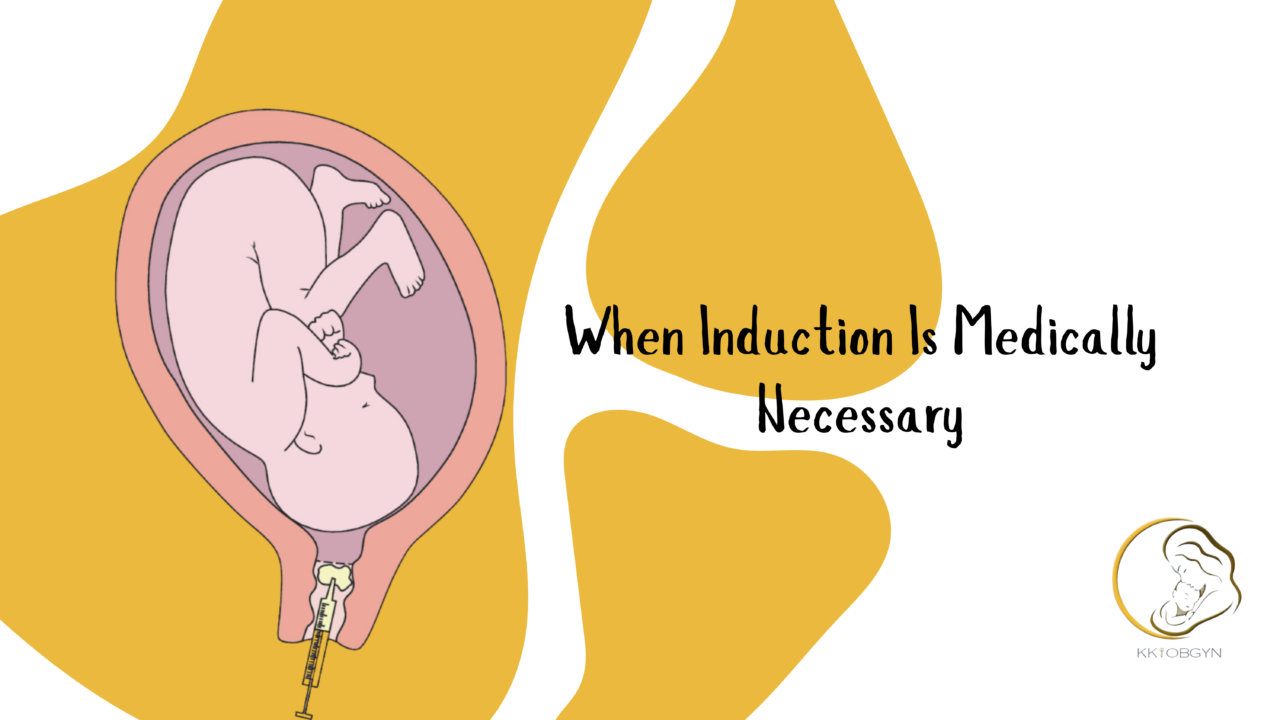
Labour is often expected to begin naturally, but this does not always happen within a safe timeframe.
In some cases, waiting for spontaneous labour can increase risks for both the mother and baby. This is when medical induction of labour becomes necessary.
Many women hear the word “induction” and feel anxious, thinking it means something has gone wrong. But in reality:
Induction is often a preventive safety measure, not an emergency response.
This blog explains what induction is, when it is needed, and how doctors decide the right time.
What Is Labour Induction?

Induction of labour is a medical process used to:
- Start labour artificially
- Stimulate uterine contractions
- Prepare the cervix for birth
It may involve:
- Medication (prostaglandins or oxytocin)
- Mechanical methods (balloon catheter)
- Breaking of waters (amniotomy)
Why Induction Is Sometimes Necessary
Induction is recommended when continuing the pregnancy poses more risk than delivery.
1. Overdue Pregnancy (Post-Term Pregnancy)
When pregnancy goes beyond 41–42 weeks, risks increase.

Risks include:
- Placenta aging (reduced oxygen supply)
- Decreased amniotic fluid
- Increased risk of stillbirth
Induction helps prevent these complications.
2. High Blood Pressure in Pregnancy
Conditions like:
- Pregnancy-induced hypertension
- Pre-eclampsia
can affect blood flow to the baby.
Induction may be needed to:
- Protect maternal health
- Prevent stroke or seizures
- Ensure safe delivery
3. Reduced Baby Growth (Fetal Growth Restriction)
When the baby is not growing properly due to:
- Placental insufficiency
- Nutritional or oxygen limitations
Doctors may recommend induction to:
- Deliver the baby at a safer time
- Prevent further growth restriction
4. Ruptured Membranes Without Labour Starting

When the “waters break” but labour does not start:
- Infection risk increases over time
- Baby loses protective barrier
Induction is often recommended within a safe time window.
5. Maternal Health Conditions
Induction may be needed if the mother has:
- Diabetes (gestational or pre-existing)
- Kidney disease
- Heart conditions
- Severe infections
These conditions can make prolonged pregnancy unsafe.
6. Reduced Amniotic Fluid
Low fluid levels can indicate:
- Placental stress
- Reduced fetal protection
Induction may be recommended to avoid complications.
When Induction Is NOT Necessary
Induction should NOT be done:
- Without medical indication
- Before the baby is ready (unless risk is high)
- Based only on convenience
Normal vs Medically Necessary Induction
| Feature | Elective Induction | Medical Induction |
|---|---|---|
| Reason | Convenience or preference | Health risk prevention |
| Timing | Planned | Based on medical need |
| Risk level | Low-risk pregnancy | Higher-risk pregnancy |
| Decision basis | Personal choice | Clinical evaluation |
How Doctors Decide on Induction
Doctors assess:
1. Baby’s Health
- Heart rate
- Movement patterns
- Growth scans
2. Placenta Function
- Blood flow
- Fluid levels
- Signs of aging
3. Cervical Readiness (Bishop Score)
Doctors assess whether the cervix is:
- Soft
- Dilated
- Thin (effaced)
- Positioned correctly
This determines how successful induction may be.
What Happens During Induction
Step 1: Cervical Preparation
- Medication or balloon catheter softens cervix
Step 2: Starting Contractions
- Oxytocin drip may be used
Step 3: Monitoring
- Baby’s heart rate is closely watched
- Contraction strength is adjusted
How Long Does Induction Take?
It varies:
- A few hours to over 24–48 hours
- Depends on cervical readiness and response
Risks of Induction (When Medically Used Correctly)
Induction is generally safe but may include:
- Stronger contractions
- Longer labour
- Increased need for pain relief
- Possible assisted delivery
Serious complications are rare when properly monitored.
Emotional Side of Induction
Many women feel:
- Fear of “unnatural” labour
- Anxiety about pain
- Loss of control
But understanding the reason helps:
Induction is not about interfering, it is about protecting.
When Induction Saves Lives
Induction can prevent:
- Stillbirth
- Severe maternal complications
- Fetal distress
- Emergency emergencies at later stages
It is often a timely intervention rather than a last resort.
Key Takeaway
- Induction is used when continuing pregnancy becomes risky
- It is based on medical assessment, not preference alone
- It helps protect both mother and baby when carefully managed
Final Thoughts
Labour induction is not about replacing natural birth, it is about ensuring that birth happens at the safest possible time.
The decision is always guided by one principle:
Safety for mother and baby comes first.