

Introduction
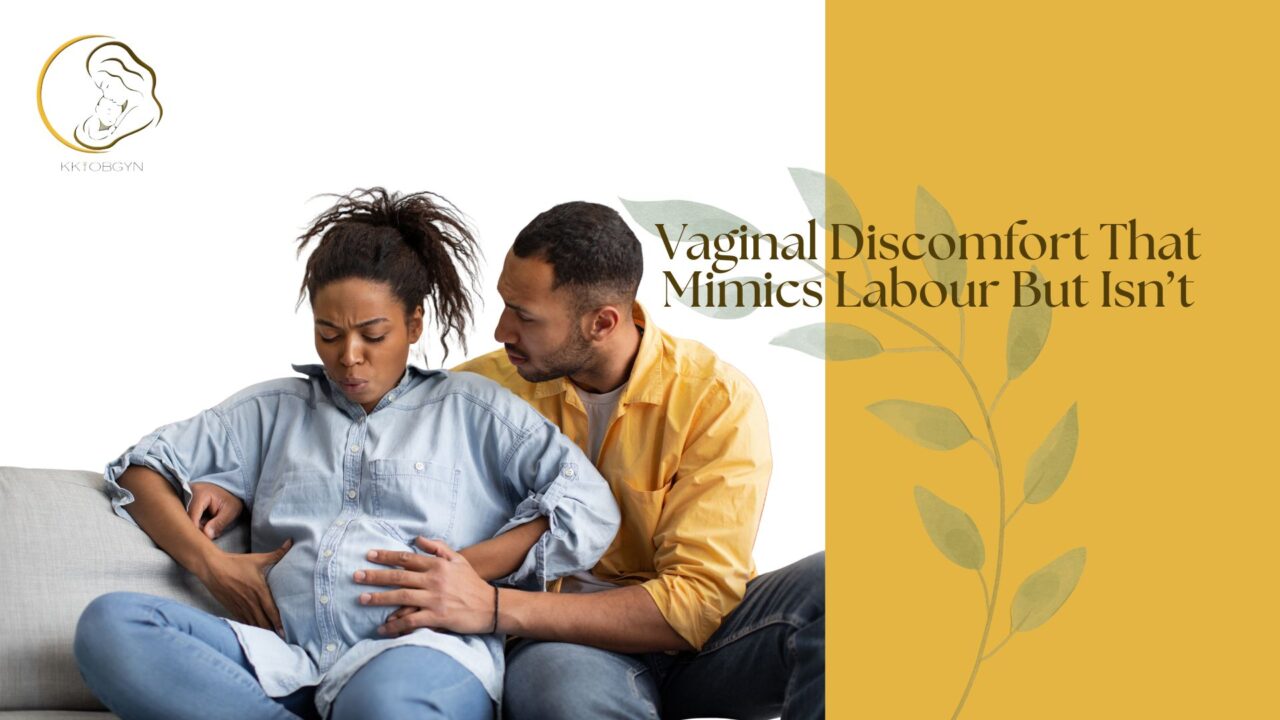
Few sensations create as much fear as pain, pressure, or tightening in the vagina during pregnancy. Many women immediately think:
- Is this labour?
- Is my cervix opening?
- Am I going to deliver early?
While true labour has specific features, many non-labour conditions can closely mimic labour sensations, especially in pregnancy and the postpartum period.
Understanding these differences helps reduce panic while ensuring real warning signs are not ignored.
Why Vaginal Discomfort Can Feel Like Labour
The vagina, cervix, uterus, pelvic floor, bladder, and bowels all share nerve pathways. This means discomfort from one area can feel like it’s coming from another.
Additionally, pregnancy increases:
- Pelvic pressure
- Nerve sensitivity
- Blood flow
- Muscle fatigue
This makes sensations feel stronger and more alarming.
Common Conditions That Mimic Labour
1. Braxton Hicks Contractions
These are practice contractions that:
- Are irregular
- Do not intensify
- Improve with rest or hydration
- Do not cause cervical change
They may feel like tightening or vaginal pressure.
2. Pelvic Floor Muscle Spasms
Pelvic muscles may tighten due to:
- Prolonged standing
- Stress
- Fatigue
- Poor posture
This can cause:
- Sharp vaginal pain
- Heaviness
- Pulsing or aching
3. Round Ligament Pain
As the uterus grows, ligaments stretch, causing:
- Sudden sharp pain
- Pain triggered by movement
- Discomfort radiating into the vagina
This pain is common and non-dangerous.
4. Baby’s Position and Pressure
A low-lying or engaged baby can cause:
- Cervical pressure
- Shooting vaginal pains
- Sensation of fullness
Many women describe this as “being kicked from the inside”.
5. Cervical Sensitivity
Increased blood flow makes the cervix sensitive, causing:
- Pressure
- Mild cramping
- Deep vaginal discomfort
This does not always indicate dilation.
Symptom Checklist: False Labour Sensations
|
Feature |
Likely Not Labour |
|
Irregular discomfort |
✅ |
|
Improves with rest |
✅ |
|
No pattern |
✅ |
|
No vaginal bleeding |
✅ |
|
No fluid leakage |
✅ |
|
Stops with hydration |
✅ |
True Labour vs Labour-Like Discomfort
|
Feature |
True Labour |
Not Labour |
|
Contractions |
Regular |
Irregular |
|
Intensity |
Increases |
Stays same |
|
Timing |
Predictable |
Random |
|
Relief |
None |
Improves |
|
Cervical change |
Yes |
No |
This distinction is critical for peace of mind.
Vaginal Pressure in Late Pregnancy
As labour approaches, pressure may increase due to:
- Baby descending
- Cervical softening
- Pelvic widening
However, pressure alone does not confirm labour.
When Vaginal Discomfort Is Concerning
Seek urgent medical care if you experience:
- Regular painful contractions
- Vaginal bleeding
- Sudden gush of fluid
- Severe constant pain
- Fever
- Reduced fetal movement
Never hesitate to be assessed, reassurance is part of care.
Emotional Component of Labour Fear
Fear heightens pain perception. Anxiety can:
- Tighten pelvic muscles
- Increase discomfort
- Mimic labour sensations
Education reduces unnecessary suffering.
What Doctors May Check
A healthcare provider may:
- Monitor contractions
- Examine the cervix
- Check fetal heart rate
- Assess hydration
- Rule out infection
Often, reassurance is the outcome.
How to Relieve Non-Labour Discomfort
✔ Rest
✔ Change position
✔ Hydrate
✔ Warm compress
✔ Gentle stretching
✔ Calm breathing
Small adjustments can bring significant relief.
Key Takeaway
Not all vaginal pain or pressure is labour. Many benign pregnancy changes imitate labour closely without being dangerous.
Knowing the difference empowers women to respond calmly and confidently.