

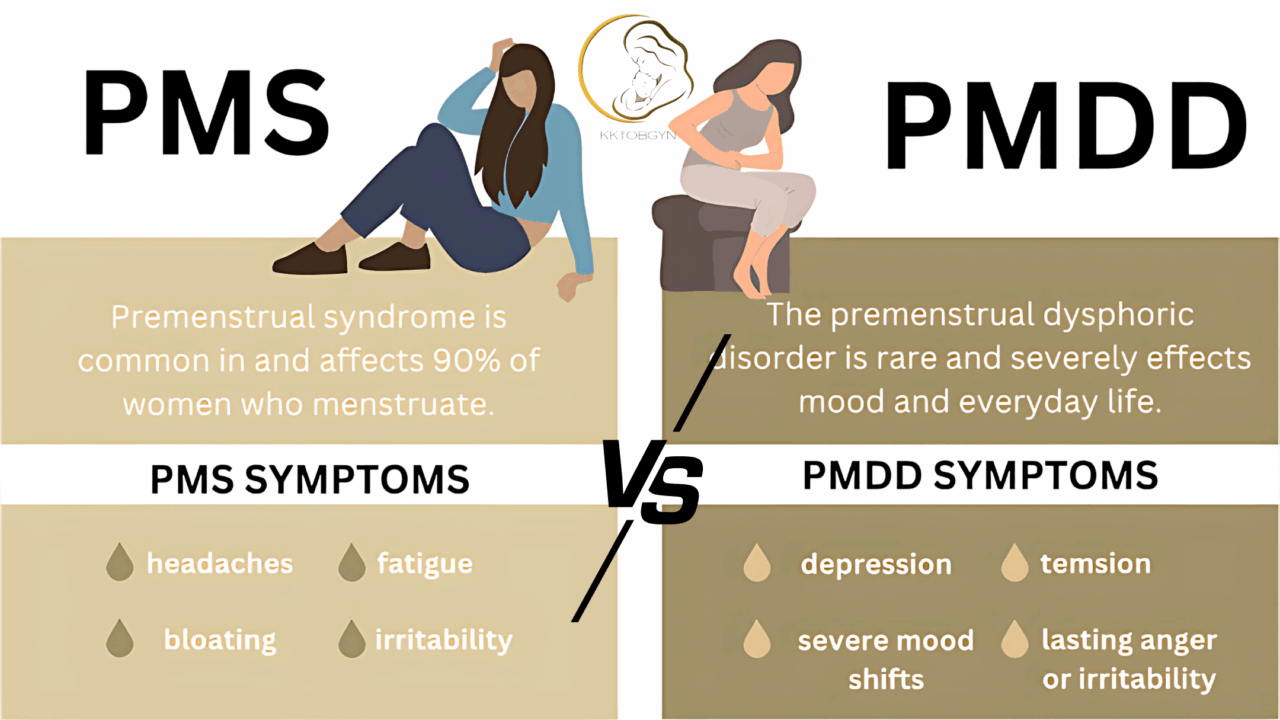
Many women experience physical or emotional symptoms before their menstrual period—commonly known as Premenstrual Syndrome (PMS). But for some, those symptoms are so severe that they interfere with daily life, indicating a more serious condition called Premenstrual Dysphoric Disorder (PMDD).
This blog explores the differences between PMS and PMDD, their symptoms, causes, diagnosis, and treatment options to help you better understand and manage your menstrual health.
What Is PMS?
Premenstrual Syndrome (PMS) is a group of emotional and physical symptoms that occur in the luteal phase of the menstrual cycle (1–2 weeks before menstruation). Up to 75% of menstruating women experience some form of PMS.
Common PMS Symptoms Include:
- Bloating
- Breast tenderness
- Mild mood swings
- Irritability
- Fatigue
- Headaches
- Acne
- Food cravings
PMS symptoms are generally mild to moderate and usually resolve shortly after menstruation begins.
What Is PMDD?
Premenstrual Dysphoric Disorder (PMDD) is a severe, chronic condition that affects 5–10% of women of reproductive age. It is recognized as a mood disorder in the DSM-5 (Diagnostic and Statistical Manual of Mental Disorders).
PMDD symptoms are similar to PMS but are more intense and disabling, often disrupting work, relationships, and daily functioning.
Common PMDD Symptoms Include:
- Severe depression or hopelessness
- Anxiety or panic attacks
- Intense irritability or anger
- Extreme mood swings
- Difficulty concentrating
- Sleep disturbances
- Suicidal thoughts
- Severe fatigue
Symptoms often begin about 7–10 days before menstruation and significantly improve within a few days after bleeding starts.
PMS vs. PMDD: Key Differences
|
Feature |
PMS |
PMDD |
|
Prevalence |
~75% of menstruating women |
5–10% of menstruating women |
|
Severity |
Mild to moderate |
Severe, often disabling |
|
Emotional Impact |
Irritability, sadness |
Intense mood changes, depression |
|
Physical Symptoms |
Bloating, cramps, fatigue |
Similar but often more intense |
|
Daily Function |
Usually unaffected |
Impaired work, relationships, etc. |
|
DSM-5 Recognition |
Not classified as a mental disorder |
Recognized mood disorder |
What Causes PMS and PMDD?
While the exact causes are unknown, several factors may contribute:
- Hormonal fluctuations: Estrogen and progesterone changes may affect mood-regulating neurotransmitters.
- Serotonin imbalance: Low serotonin levels are linked to mood symptoms.
- Genetics: PMDD may run in families.
- Stress and trauma: History of trauma or chronic stress may increase risk.
- Underlying mental health conditions: Depression or anxiety can overlap or worsen symptoms.
How Is PMDD Diagnosed?
There is no single test for PMDD. Diagnosis is based on symptom tracking over at least two consecutive menstrual cycles.
To be diagnosed with PMDD, a person must have:
- At least five symptoms (one must be mood-related)
- Symptoms present in the luteal phase only
- Symptoms that interfere significantly with daily life
Doctors may use tools like the Daily Record of Severity of Problems (DRSP) to assess symptom patterns.
Managing PMS
- Lifestyle adjustments:
- Regular exercise
- Balanced diet with reduced caffeine, sugar, and salt
- Stress management (yoga, meditation)
- Supplements:
- Calcium, magnesium, vitamin B6, evening primrose oil
- Pain relief:
- NSAIDs (e.g., ibuprofen) for cramps and headaches
Treating PMDD
PMDD often requires a more structured treatment approach:
- Lifestyle Changes (as with PMS)
- Medications:
- SSRIs (e.g., fluoxetine, sertraline) – first-line treatment
- Hormonal birth control to suppress ovulation
- GnRH agonists (in severe cases)
- Therapies:
- Cognitive Behavioral Therapy (CBT)
- Support groups or counseling
- Diet and Supplements:
- Omega-3s, calcium, vitamin D, magnesium
- Surgery (very rare):
- Hysterectomy with oophorectomy in extreme, treatment-resistant cases
When to See a Doctor
If your symptoms:
- Cause emotional distress or suicidal thoughts
- Disrupt your relationships or work
- Do not improve with lifestyle changes
…then it’s time to consult a healthcare provider. PMDD is a medical condition, not something you need to “just deal with.”
Final Thoughts
Understanding the difference between PMS and PMDD is crucial for managing your mental and physical well-being. While PMS is common and usually manageable with lifestyle tweaks, PMDD requires medical attention and support.
Track your symptoms, talk to your provider, and remember—you don’t have to suffer in silence. Help and healing are available.