

Cervical Mucus Pregnancy Signs: What Your Body Signals Mean
For women trying to conceive or avoid pregnancy, understanding their body’s natural signals can be invaluable. One such indicator is cervical mucus, which changes in consistency, color, and volume throughout the menstrual cycle. Many women wonder: Can cervical mucus predict pregnancy before a test? While it is not a definitive method, changes in cervical mucus can provide early clues about potential pregnancy.
Understanding Cervical Mucus Throughout the Cycle
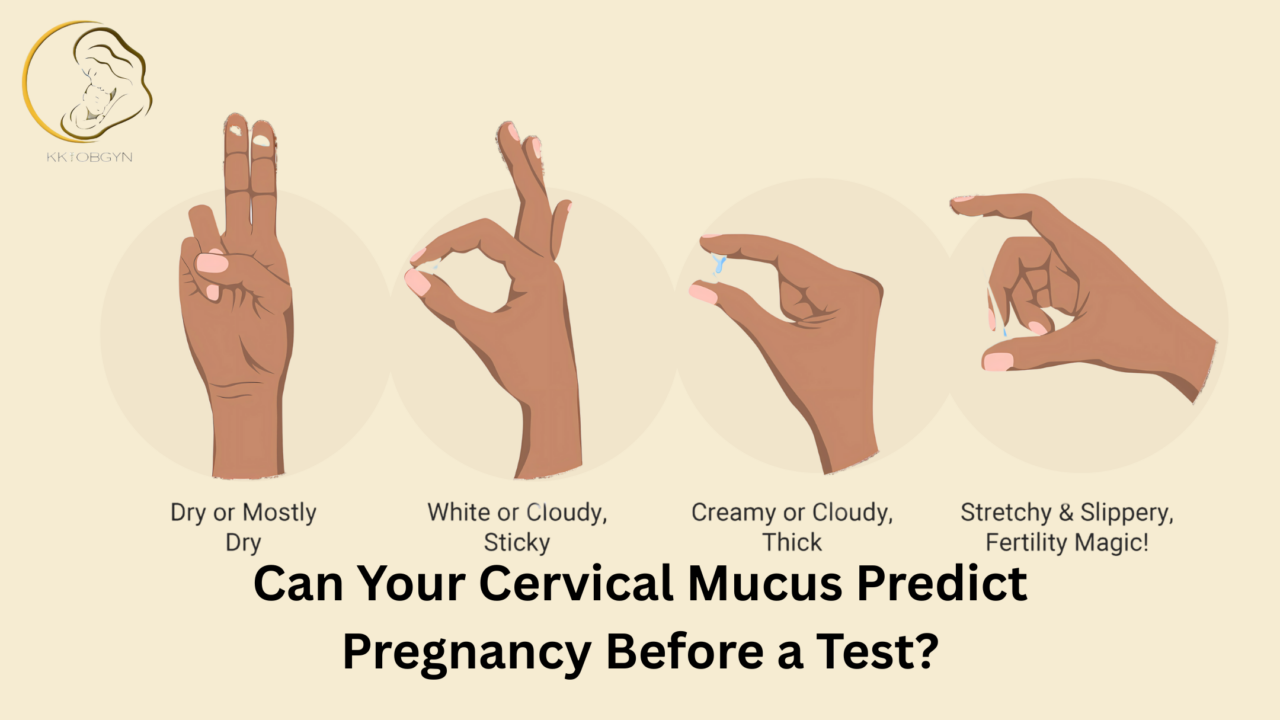
Cervical mucus is produced by glands in the cervix and plays a vital role in fertility. It changes in response to hormonal fluctuations throughout the menstrual cycle.
|
Menstrual Phase |
Cervical Mucus Characteristics |
|
Menstrual Period (Days 1-5) |
Minimal or absent due to bleeding |
|
Follicular Phase (Days 6-14) |
Sticky, then creamy, gradually increasing in moisture |
|
Ovulation (Days 13-16) |
Egg-white, clear, stretchy, optimal for sperm movement |
|
Luteal Phase (Days 17-28) |
Thick, sticky, or dry due to rising progesterone |
How Cervical Mucus May Indicate Early Pregnancy
If pregnancy occurs, cervical mucus changes again in response to the hormone progesterone. The following characteristics might hint at early pregnancy:
- Increased Cervical Mucus – Many women notice an increase in cervical mucus after ovulation if pregnancy has occurred. It may be thicker and more abundant due to rising progesterone.
- Creamy or Lotion-Like Consistency – Instead of drying up post-ovulation (which is common when pregnancy does not occur), mucus may remain creamy and moist.
- Slightly Yellow or White Tint – Some women report a whitish or pale yellow mucus, which can be an early pregnancy sign.
- Sustained High Moisture Levels – Unlike the drying effect seen before menstruation, persistent moisture may suggest conception.
|
Cervical Mucus Condition |
Possible Indication |
|
Dry or absent |
Likely no pregnancy |
|
Creamy and increased volume |
Possible pregnancy |
|
Clear and stretchy post-ovulation |
Normal fertile phase, not a pregnancy sign |
|
Sticky or thick white discharge |
Could indicate pregnancy but not definitive |
Limitations of Using Cervical Mucus as a Pregnancy Predictor
While cervical mucus changes can provide clues, they are not a foolproof pregnancy test. Several factors can affect mucus consistency, including:
- Hormonal Imbalances – Conditions like polycystic ovary syndrome (PCOS) or thyroid disorders can alter mucus production.
- Infections – Yeast infections or bacterial vaginosis can cause changes in vaginal discharge, mimicking pregnancy-related mucus.
- Hydration and Diet – Fluid intake and nutrition impact mucus quality, making it less reliable as a pregnancy indicator.
Cervical Position as an Additional Clue
In addition to mucus changes, the cervix itself undergoes shifts during pregnancy. Early pregnancy signs include:
- A Soft Cervix – Higher progesterone levels cause the cervix to become softer.
- A High Cervical Position – Instead of lowering as it does before menstruation, a high cervix may indicate early pregnancy.
- Increased Moisture – Consistently moist conditions can signal conception.
|
Cervical Position |
Possible Meaning |
|
Low and firm |
Not pregnant, pre-menstrual phase |
|
High and soft |
Possible pregnancy |
|
Medium position |
Could go either way |
Final Thoughts: Should You Rely on Cervical Mucus to Detect Pregnancy?
While cervical mucus and cervical position can provide early signs of pregnancy, they should not replace a home pregnancy test or medical confirmation. The most reliable way to confirm pregnancy is to take a urine test after a missed period or consult a doctor for a blood test.
For those tracking their fertility, monitoring cervical mucus remains a valuable tool, but it should always be combined with other methods like basal body temperature tracking or ovulation predictor kits for greater accuracy.
Understanding cervical mucus changes is a natural way for women to monitor their reproductive health. Cervical mucus pregnancy signs can appear before a missed period, helping you track fertility and potential conception. While cervical mucus changes provide valuable clues about your menstrual cycle and ovulation, they work best when combined with other monitoring methods. At Dr KY Kakudji's practice in Randfontein, we help women understand these natural signals and provide professional guidance on fertility awareness and family planning.
Cervical mucus pregnancy signs offer valuable early clues for women trying to conceive. Understanding how cervical mucus pregnancy signs evolve helps you recognize potential conception before a positive test. While cervical mucus pregnancy signs alone cannot definitively confirm pregnancy, they provide meaningful insights into your body's hormonal shifts. Many women notice increased cervical mucus with a creamy consistency after ovulation if pregnancy has occurred—a key indicator alongside other fertility markers. At Dr KY Kakudji's practice in Randfontein, we help women interpret these natural signals as part of comprehensive reproductive health monitoring.