

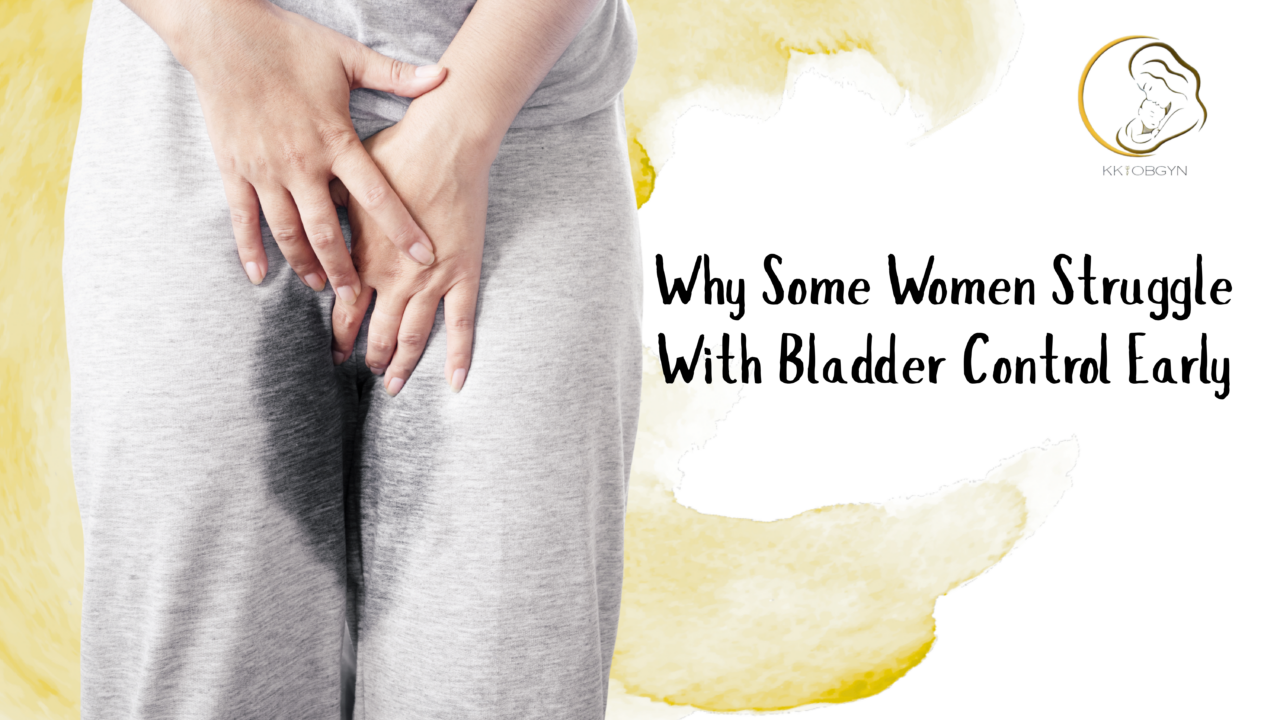
After childbirth, many women expect physical recovery to take time but one symptom that often feels surprising, and sometimes embarrassing, is loss of bladder control.
This may present as:
- Leaking urine when coughing, sneezing, or laughing
- Sudden urge to urinate with little control
- Difficulty holding urine
- Frequent trips to the bathroom
For many women, this happens in the early postpartum period and while it is common, it should never be dismissed.
Bladder control issues are not just “part of motherhood”, they are a sign that the pelvic system needs support.
This blog explains why this happens, what is normal, and when to seek help.
Understanding Bladder Control


Bladder control depends on:
- Pelvic floor muscles
- Nerve signals
- Bladder function
- Urethral sphincter control
During pregnancy and childbirth, all of these can be affected.
Why Bladder Control Problems Occur After Birth
1. Pelvic Floor Muscle Weakness


The pelvic floor muscles support the bladder and help control urine flow.
During pregnancy and delivery:
- These muscles stretch significantly
- They may weaken or lose tone
This can lead to stress incontinence, where urine leaks during pressure (e.g. coughing or sneezing).
2. Nerve Stretching or Damage
Childbirth can stretch or compress nerves that control:
- Bladder sensation
- Muscle contraction
This may result in:
- Delayed urge to urinate
- Poor bladder control
- Difficulty emptying the bladder fully
3. Pressure From Pregnancy
During pregnancy, the growing uterus:
- Presses on the bladder
- Stretches supporting structures
Even after delivery, it takes time for these structures to recover.
4. Vaginal Delivery and Trauma
Women who have:
- Long labour
- Assisted delivery (forceps/vacuum)
- Large babies
may experience more strain on the pelvic floor.
5. Hormonal Changes
After birth:
- Oestrogen levels drop
This can affect:
- Tissue elasticity
- Urethral support
- Bladder sensitivity
Types of Postpartum Bladder Issues
1. Stress Incontinence
Leakage during:
- Coughing
- Sneezing
- Laughing
- Lifting
2. Urge Incontinence

Sudden, intense urge to urinate with leakage before reaching the toilet.
3. Mixed Incontinence
A combination of both stress and urge symptoms.
Normal vs Concerning Bladder Control Issues
| Feature | Normal Early Postpartum | Concerning |
|---|---|---|
| Leakage | Mild, occasional | Frequent or worsening |
| Duration | Improves over weeks | Persists beyond 6–12 weeks |
| Control | Gradually improving | No improvement |
| Associated symptoms | None | Pain, burning, infection signs |
Symptom Checklist: When to Seek Help
| Symptom | Possible Concern |
|---|---|
| Leakage not improving after weeks | Pelvic floor dysfunction |
| Strong urgency with accidents | Overactive bladder |
| Pain or burning urination | Infection |
| Inability to urinate | Urinary retention |
| Frequent urination with discomfort | UTI |
Why Early Treatment Matters
Ignoring bladder issues can lead to:
- Long-term incontinence
- Reduced quality of life
- Emotional distress
- Avoidance of physical activity
Early support leads to faster and more complete recovery.
How Bladder Control Issues Are Managed
1. Pelvic Floor Exercises (Kegels)


These exercises help:
- Strengthen pelvic muscles
- Improve bladder support
- Reduce leakage
Consistency is key.
2. Bladder Training
- Scheduled bathroom visits
- Gradual increase in holding time
- Improving bladder capacity
3. Physiotherapy
Pelvic floor physiotherapists can:
- Assess muscle strength
- Guide correct exercise technique
- Provide targeted rehabilitation
4. Medical Treatment
In some cases:
- Medication may be used
- Further investigations may be needed
Lifestyle Adjustments That Help
- Avoid heavy lifting early postpartum
- Maintain healthy hydration
- Avoid excessive caffeine
- Support bowel health (avoid constipation)
Emotional Impact of Bladder Control Issues
Many women feel:
- Embarrassed
- Isolated
- Afraid to talk about symptoms
But it is important to understand:
This is a common medical condition, not a personal failure.
Seeking help is a step toward recovery, not weakness.
Recovery Timeline
For many women:
- Improvement begins within weeks
- Significant recovery occurs by 3 months
- Full recovery may take longer depending on severity
Early intervention improves outcomes significantly.
Final Thoughts
Bladder control issues after childbirth are common but they are not something you have to live with.
With the right support, most women can:
- Regain control
- Strengthen their pelvic floor
- Return to normal daily activities
Key Takeaway
- Early bladder control issues are often due to pelvic floor changes
- Most cases improve with proper care and exercises
- Persistent symptoms should always be evaluated