
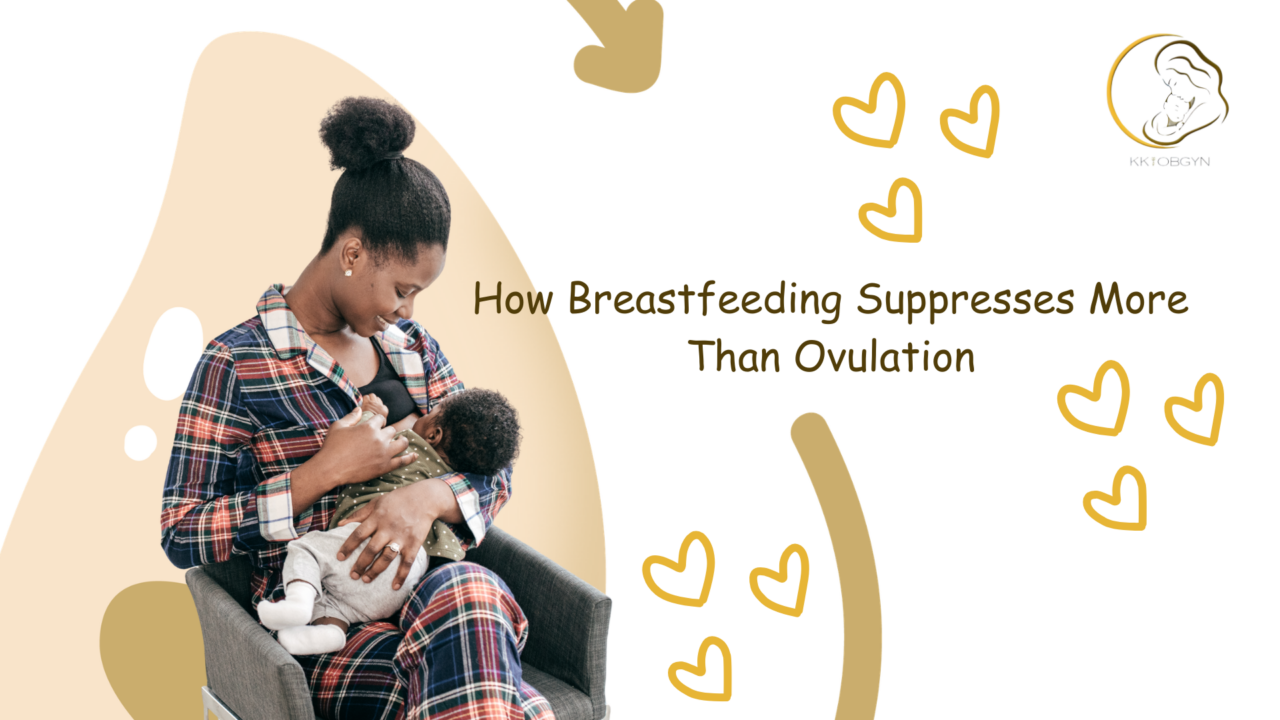
Most women know that breastfeeding can delay the return of their period.
But very few realise that breastfeeding suppresses far more than ovulation.
It affects:
- Estrogen levels
- Vaginal lubrication
- Libido
- Mood stability
- Bone density
- Energy levels
- Pelvic tissue healing
Breastfeeding is powerful. It is biologically designed to prioritise the baby’s survival, sometimes at the expense of the mother’s hormonal comfort.
Understanding these changes can reduce confusion, fear, and shame during the postpartum period.
The Hormonal Shift After Birth
Immediately after delivery:
- Estrogen drops sharply
- Progesterone drops sharply
- Prolactin rises (to stimulate milk production)
- Oxytocin increases (for milk let-down and bonding)
When breastfeeding continues, prolactin remains elevated.
High prolactin suppresses ovulation by blocking signals from the brain to the ovaries.
But that’s only the beginning.
What Breastfeeding Suppresses
| Hormone/System | Effect of Breastfeeding |
|---|---|
| Ovulation | Delayed or suppressed |
| Estrogen | Reduced |
| Progesterone | Low without ovulation |
| Vaginal lubrication | Decreased |
| Libido | Often reduced |
| Menstrual cycle | Irregular or absent |
| Bone density (temporary) | Slight reduction |
These changes are normal but they can feel distressing if unexpected.
Low Estrogen and Vaginal Dryness
Estrogen maintains:
- Vaginal tissue thickness
- Natural lubrication
- Elasticity
- Healthy blood flow
When estrogen is low (common during breastfeeding), women may experience:
- Vaginal dryness
- Burning during intercourse
- Pain with penetration
- Increased irritation
- Recurrent infections
Many new mothers are surprised by painful sex postpartum, even months after birth.
This is often hormonal, not psychological.
Clinics like KKOBGYN frequently address postpartum dryness linked to lactation.
Libido Changes: More Than Exhaustion
Low libido during breastfeeding is common.
Reasons include:
- Elevated prolactin suppressing estrogen
- Physical exhaustion
- Interrupted sleep
- Emotional overwhelm
- Body image changes
- Pelvic discomfort
It is not a failure of attraction.
It is biology prioritising caregiving over reproduction.
Breastfeeding and Mood
Hormonal shifts influence mood significantly.
Some women experience:
- Emotional sensitivity
- Irritability
- Anxiety
- Mood swings
Oxytocin promotes bonding but sleep deprivation and estrogen suppression can affect emotional resilience.
If mood symptoms are severe or persistent, postpartum depression screening is essential.
Bone Health and Breastfeeding
Estrogen helps protect bone density.
During breastfeeding:
- Temporary bone mineral loss can occur
- The body redirects calcium to milk production
This loss is usually reversible after weaning and menstrual return.
Adequate calcium and vitamin D intake are important.
The Return of Periods: Unpredictable Patterns
Menstruation may:
- Not return for months
- Return while still breastfeeding
- Appear irregular initially
- Be heavier or lighter than before
Ovulation can occur before the first period, meaning pregnancy is possible even without menstruation.
Here’s a comparison:
| Fully Breastfeeding | Mixed Feeding |
|---|---|
| Higher prolactin | Lower prolactin |
| Longer ovulation suppression | Earlier cycle return |
| More dryness | Estrogen recovers sooner |
| Delayed fertility | Fertility returns earlier |
Every body responds differently.
Breastfeeding and Vaginal Infections
Low estrogen can:
- Thin vaginal tissue
- Alter pH
- Reduce protective bacteria
This may increase susceptibility to:
- Yeast infections
- Bacterial imbalance
- Urinary tract infections
If infections are recurrent, evaluation is necessary.
Symptom Checklist: Breastfeeding-Related Hormonal Effects
| Symptom | Common During Breastfeeding? |
|---|---|
| Vaginal dryness | Yes |
| Painful intercourse | Yes |
| Absent period | Yes |
| Low libido | Yes |
| Mood changes | Yes |
| Mild hair shedding | Yes |
| Severe depression | Needs evaluation |
Understanding what is normal reduces unnecessary anxiety.
Postpartum Healing and Estrogen Suppression
Low estrogen can also slow:
- Vaginal tissue healing
- Scar elasticity (after tears or episiotomy)
- Comfort during intercourse
Some women benefit from:
- Pelvic floor physiotherapy
- Water-based lubricants
- Vaginal moisturisers
- Medical consultation for severe dryness
Discomfort should not be endured silently.
When to Seek Medical Advice
Consult a healthcare provider if you experience:
- Severe vaginal pain
- Persistent burning
- Strong odor discharge
- Heavy unexpected bleeding
- Severe mood changes
- Signs of infection
- Pelvic heaviness or incontinence
Breastfeeding changes are normal but severe symptoms deserve attention.
Emotional Adjustment and Relationship Impact
Breastfeeding shifts identity.
Some women struggle with:
- Feeling “touched out”
- Reduced sexual desire
- Body image changes
- Pressure to resume intimacy
Communication is crucial.
Partners should understand that hormonal suppression is biological, not rejection.
After Weaning: Hormonal Reawakening
When breastfeeding decreases or stops:
- Prolactin falls
- Estrogen rises
- Ovulation resumes
- Vaginal lubrication improves
- Libido often returns
Cycles may take a few months to regulate fully.
Temporary irregularity after weaning is common.
Normal Breastfeeding Effects vs Concerning Symptoms
| Normal | Concerning |
|---|---|
| Absent period | Heavy uncontrolled bleeding |
| Mild dryness | Severe pain with intercourse |
| Lower libido | Persistent depression |
| Emotional sensitivity | Panic attacks or hopelessness |
| Gradual cycle return | Fever with discharge |
If unsure, consult a provider.
Final Thoughts
Breastfeeding is powerful and hormonally complex.
It suppresses more than ovulation.
It shifts estrogen, affects tissue health, alters libido, and changes emotional patterns.
None of this means something is wrong.
It means your body is prioritising nourishment and survival.
But mothers deserve comfort too.
Understanding these hormonal effects helps women:
- Reduce shame
- Communicate clearly
- Seek help when needed
- Protect vaginal health
- Navigate postpartum confidently
Your body is doing extraordinary work but you still deserve support.