

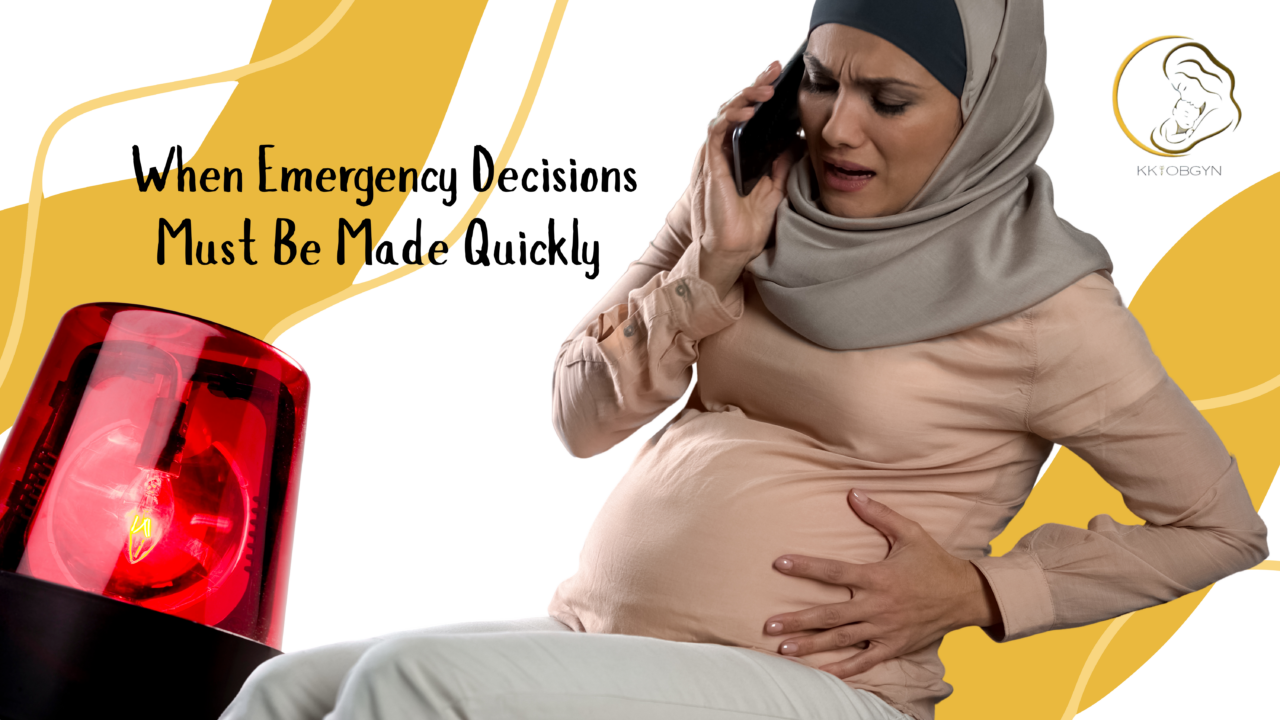
In pregnancy and labour, most situations progress gradually, allowing time for discussion, observation, and decision-making.
But there are moments when things change rapidly and unpredictably, requiring doctors to make urgent, life-saving decisions within minutes.
For many women, this can feel sudden, frightening, and even confusing, especially when there was no obvious warning beforehand.
This blog explains why emergency decisions happen, what triggers them, and how healthcare teams balance speed with safety.
Understanding What “Emergency Decision” Means

An emergency decision in obstetrics refers to:
A situation where immediate action is required to protect the life or health of the mother, baby, or both.
This may involve:
- Emergency caesarean section
- Assisted delivery (vacuum/forceps)
- Immediate resuscitation of the baby
- Rapid treatment of maternal complications
The key feature is time sensitivity, delay can increase risk significantly.
Why Emergency Situations Happen Suddenly
Pregnancy and labour are usually stable processes, but they depend on:
- Placental function
- Oxygen supply
- Maternal health
- Fetal tolerance to stress
When one of these systems fails suddenly, the situation can change quickly.
1. Fetal Distress (Baby Not Tolerating Labour)


One of the most common reasons for emergency action is fetal distress.
This means the baby may not be receiving enough oxygen due to:
- Cord compression
- Placental insufficiency
- Excessively strong contractions
- Maternal blood pressure issues
Warning signs on monitoring:
- Abnormal heart rate patterns
- Repeated late decelerations
- Reduced variability
If oxygen supply is compromised, delivery may need to happen urgently.
2. Placental Complications


The placenta is the baby’s lifeline. If it is compromised, the baby can become at risk very quickly.
Examples include:
- Placental abruption (premature separation of placenta)
- Placenta previa bleeding
- Sudden reduction in placental blood flow
These conditions can lead to:
- Heavy bleeding
- Oxygen deprivation
- Rapid fetal distress
Emergency delivery is often required immediately.
3. Uterine Rupture (Rare but Serious)
This is a rare but critical emergency where the uterus tears during labour.
It may occur in women with:
- Previous caesarean scars
- Strong, excessive contractions
- Uterine abnormalities
Risks include:
- Severe maternal bleeding
- Loss of oxygen supply to baby
- Rapid deterioration of both mother and baby
Immediate surgical intervention is required.
4. Prolonged Labour with No Progress

Sometimes labour stops progressing despite strong contractions.
This may be due to:
- Baby not descending
- Cervix not dilating
- Cephalopelvic disproportion
If prolonged, risks increase:
- Maternal exhaustion
- Infection risk
- Fetal stress
A decision may be made to deliver safely rather than continue waiting.
5. Umbilical Cord Emergencies
The umbilical cord is the baby’s oxygen supply line.
Problems include:
- Cord prolapse (cord slips ahead of baby)
- Cord compression
- Nuchal cord complications (cord around neck)
These can rapidly reduce oxygen flow and require urgent delivery.
6. Severe Maternal Complications


Sometimes emergencies arise from the mother’s condition, including:
- Severe pre-eclampsia or eclampsia
- Heavy bleeding (postpartum haemorrhage)
- Infection (sepsis)
- Cardiac or respiratory distress
These conditions can quickly become life-threatening if not treated immediately.
How Doctors Make Fast Decisions
Even in emergencies, decisions are not random, they follow structured assessment.
1. Rapid Assessment
- Vital signs
- Fetal heart rate
- Bleeding status
- Cervical progress
2. Risk Comparison
Doctors constantly weigh:
What is safer right now: continuing labour or immediate delivery?
3. Multidisciplinary Input
Often involves:
- Obstetrician
- Midwives
- Anaesthetist
- Neonatal team
4. Consent (When Possible)
If time allows, the mother is informed:
- What is happening
- Why intervention is needed
- What the safest option is
In true emergencies, action may be taken immediately to save life.
Emergency vs Non-Emergency Decisions
| Feature | Routine Decision | Emergency Decision |
|---|---|---|
| Time available | Hours/days | Minutes |
| Risk level | Low to moderate | High or immediate danger |
| Communication | Detailed discussion | Brief explanation |
| Action type | Planned intervention | Immediate intervention |
Why These Decisions Can Feel Sudden
From a mother’s perspective, everything may feel normal, until suddenly it is not.
This is because:
- Internal changes are not always visible externally
- Fetal distress can develop quickly
- Placental function can decline suddenly
What feels sudden is often the result of ongoing internal monitoring detecting early warning signs.
The Emotional Experience for Mothers
Hearing words like:
- “We need to act now”
- “Baby is in distress”
- “We may need to go to theatre immediately”
can feel overwhelming.
Common emotions include:
- Fear
- Confusion
- Loss of control
- Anxiety about outcomes
It is important to remember:
Emergency decisions are made to prevent worst-case scenarios, not to create them.
What Happens After an Emergency Delivery
Depending on the situation:
For the Baby:
- Assessment by neonatal team
- Oxygen support if needed
- Monitoring in recovery or NICU
For the Mother:
- Monitoring for bleeding or complications
- Pain management
- Emotional support and debriefing
Can Emergencies Be Predicted?
Some risk factors increase likelihood, such as:
- High-risk pregnancies
- Previous complications
- Hypertension or diabetes
- Multiple pregnancies
However:
Many emergencies happen in otherwise normal pregnancies.
This is why monitoring and readiness are essential.
Final Thoughts
Emergency decisions in pregnancy and labour are not signs of failure, they are signs of responsive, protective medical care.
The goal is always simple:
Act quickly enough to prevent harm, while keeping mother and baby safe.
Even when decisions feel sudden, they are guided by careful observation, experience, and one priority:
Life preservation.
Key Takeaway
- Emergency decisions are made when delay increases risk
- Common causes include fetal distress, bleeding, or labour complications
- These decisions are fast but highly structured and life-saving