

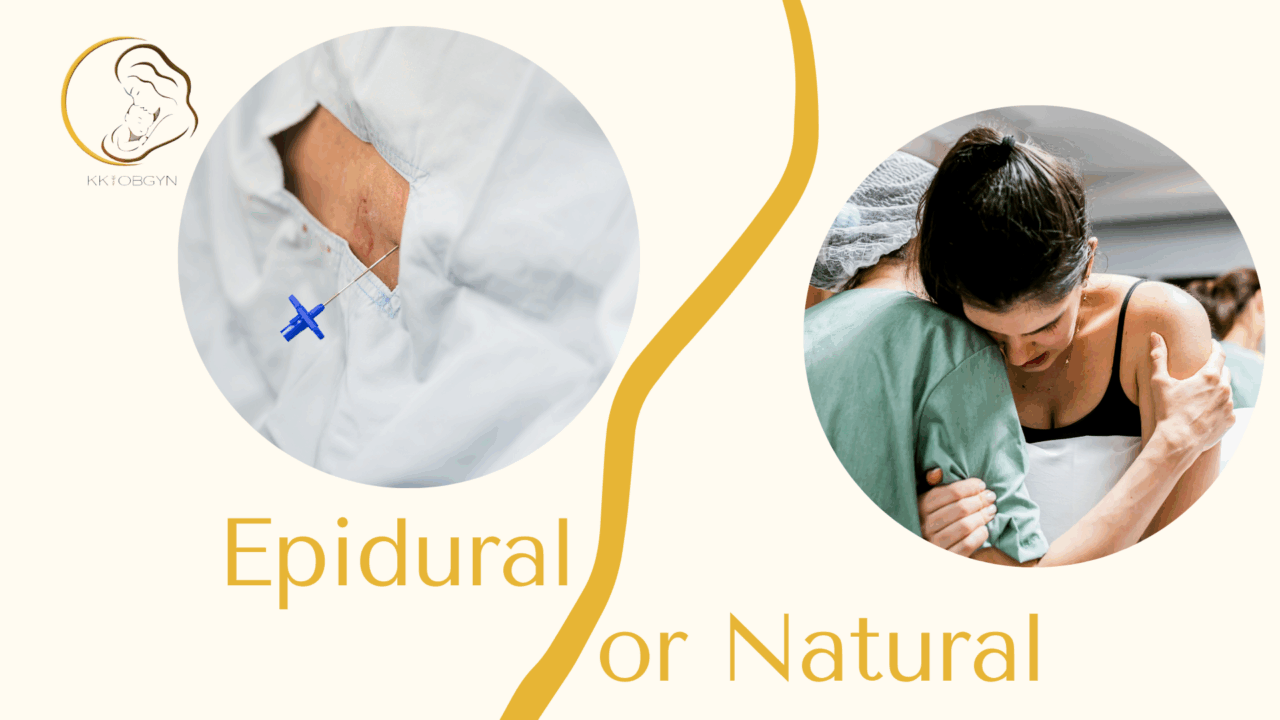
Labour is an intense and life-changing experience, often accompanied by significant pain and discomfort. Fortunately, modern medicine and holistic practices provide several pain relief options during labour. Among the most commonly debated choices are epidural anesthesia and natural, drug-free labour.
This blog explores both methods, their pros and cons, risks, and the factors that can help you make an informed decision that aligns with your birth plan and personal preferences.
Understanding Pain During Labour
Labour pain results from:
-
Uterine contractions
-
Cervical dilation and effacement
-
Pressure on surrounding organs and nerves
-
Emotional and physical fatigue
Every woman’s pain tolerance and experience are unique, which is why pain relief should be customized not judged.
Epidural Explained
An epidural is a regional anesthesia delivered into the epidural space of the spine, blocking pain from the waist down. It’s administered by an anesthesiologist once active labour begins (usually around 4–5 cm dilated).
How it Works
-
A catheter is inserted in your lower back to deliver medication continuously.
-
It numbs pain without putting you to sleep.
-
You remain awake and aware, just more comfortable.
Pros and Cons of an Epidural
| Pros | Cons |
|---|---|
| Effective pain relief | Can lower blood pressure |
| Keeps you alert during birth | May slow down labour |
| Reduces exhaustion in long labour | Numbness can limit mobility |
| Helpful in case of emergency C-section | Increased need for catheter and IV fluids |
| Allows mental focus during pushing | Possible side effects: itching, shivering, headache, backache |
Natural Labour Explained
Natural labour is childbirth without medical pain relief, relying instead on techniques like breathing, movement, massage, and water therapy to manage pain. It emphasizes the body’s natural ability to give birth and is often chosen for its minimal intervention approach.
Common Natural Pain Management Methods
| Method | Description |
|---|---|
| Breathing techniques | Controlled breathing reduces stress and manages contractions |
| Movement and positioning | Walking, squatting, and changing positions help manage pain |
| Hydrotherapy | Warm showers or baths provide relaxation |
| Massage and counterpressure | Relieves tension and discomfort |
| Hypnobirthing | Guided visualization and deep relaxation |
| TENS machine | Sends mild electrical pulses to reduce pain signals |
Pros and Cons of Natural Labour
| Pros | Cons |
|---|---|
| No medication side effects | Pain can be intense and exhausting |
| Freedom to move and choose birthing positions | May not be suitable for high-risk pregnancies |
| Shorter recovery time post-birth | Harder to rest between contractions |
| Often fewer interventions like forceps or vacuum | May still require medical help if pain becomes overwhelming |
| Sense of empowerment and control | May require extensive preparation and support |
Key Differences at a Glance
| Feature | Epidural | Natural Labour |
|---|---|---|
| Pain level | Significantly reduced | Managed but present |
| Mobility | Limited (bed rest often needed) | Full mobility |
| Intervention | High likelihood (IV, catheter, monitoring) | Minimal if low-risk |
| Birth environment | Hospital setting | Hospital or birth center, some home options |
| Partner involvement | May be more passive | Actively helps with techniques |
Situations Where Epidural May Be Recommended
-
Very long or exhausting labour
-
Multiple births (twins/triplets)
-
Hypertension or preeclampsia
-
Need for forceps, vacuum, or C-section
-
Extreme anxiety or fear that hinders progress
When Natural Labour May Be a Better Option
-
Low-risk pregnancies
-
Short labours
-
Women who prefer minimal interventions
-
Those giving birth in birthing centers or at home
-
Desire for more control over movement and positions
Can You Change Your Mind During Labour?
Absolutely. Many women begin with the intention of a natural birth but opt for an epidural as labour progresses. Others may plan on an epidural but progress too quickly for it to be administered. Flexibility is key.
Combining the Best of Both
Many hospitals offer a “walking epidural” (low-dose epidural), which:
-
Provides pain relief while maintaining partial mobility.
-
Allows more participation in labour while managing discomfort.
You can also combine natural techniques with medical support to stay calm and reduce the amount of medication needed.
Frequently Asked Questions
Q1: Does an epidural increase C-section risk?
Not directly. However, if it slows down labour, interventions may increase slightly.
Q2: Can you feel when to push with an epidural?
Yes, though the sensation is muted. The care team will help guide pushing.
Q3: Can you deliver naturally after having an epidural in a previous pregnancy?
Yes. Your pain relief preference can change with each pregnancy.
Decision-Making Table: Which Pain Relief Option Suits You?
| Consideration | Choose Epidural If… | Choose Natural If… |
|---|---|---|
| Pain tolerance | You’re unsure or have low pain tolerance | You feel confident using non-medical techniques |
| Control and awareness | You want to be alert and calm but not in pain | You want full control over sensations and process |
| Medical conditions | You have a high-risk pregnancy | You have a healthy, low-risk pregnancy |
| Birth plan goals | You prioritize comfort and rest | You aim for minimal interventions |
| Flexibility | You want the option for additional interventions | You prefer to trust your body with limited aid |
Conclusion
There’s no “right” way to give birth, only the right way for you. Whether you choose an epidural or go natural, the ultimate goal is a healthy mom and baby.
Do your research, speak with your healthcare provider, prepare your body and mind, and be open to adjusting your plan based on how labour unfolds.
Your experience is valid, and your choice is yours to make.